Showing posts with label lymphedema. Show all posts

Tuesday, February 12, 2013

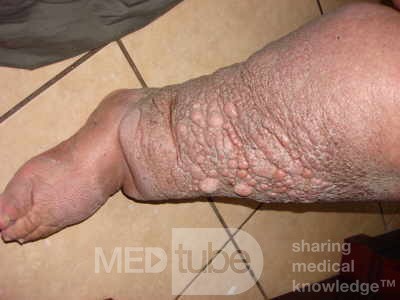
Omental flap for treatment of long standing lymphedema of the lower limb: can it end the suffering? Report of four cases with review of literatures.


Omental flap for treatment of long standing lymphoedema of the lower limb: can it end the suffering? Report of four cases with review of literatures.


Feb 2013

Source

Department of Surgery, Ninava Medical College, Mosul University, Mosul, Iraq.

Abstract

We report our experience of four cases of long-standing unilateral, secondary lymphoedema of the lower limb, for which conservative treatment has failed, that were treated in our centre using pedicled omental flap. The four patients were followed for a period of 1 year after the procedures and frequent measurements of the circumference of the affected limb revealed a reduction in the circumference ranging between 50% in the first patient to 75% in the fourth patient together with an excellent functional improvement in terms of resuming walking, daily activities, sports and work. We think that pedicled omental flap is an important, relatively easy and safe option that deserves consideration in refractory cases of lymphoedema of the lower limb.

***Please Note: This is for informational purposes only.  Not to be construed as an endorsement of this procedure. Personally, I feel much more research is imperative including long term and very long term results and potential complications. Pat***

Monday, January 7, 2013

Caring for the lymphedema foot

Caring for the lymphedema foot

January 2013


Most people who have leg lymphedema also will have foot involvment. Thus, taking care of our feet becomes even more critical for lymphedema patients.
Feet that have damaged skin, cuts, scrapes or any open areas become entry foci for bacterial infections associated with lymphedema infections. Feet with unhealthy skin can become an open door for foot fungal infections. Both can cause further complications and worsening of our lymphedema.
Keith Smiley
The National Lymphedema Network (NLN) has been flooded with questions regarding foot and ankle care for patients with lower extremity lymphedema. Dr. Joseph Hewitson, a San Francisco Podiatrist, who has worked with many lymphedema patients, provided NLN a list of guidelines and suggestions for proper foot care for people suffering from lower extremity lymphedema. These guidlelines are excerpted from The July NLN newsletter.
Wear shoes.  
I love going barefoot, but with lymphedema, this can be downright dangerous and can give bacteria a splendid opening for an infection.  Resist that temptation to go barefoot.
Make sure you don't provide an opportunity in your shoes for bacteria or fungus spores to hide and grow.  I personally use an antifungal powder in even my street shoes.
Nail Care

Be sure to trim your toenails, but not necessarily straight across. If the corners have grown into the skin, trim the offending border.
If you get an infection, you should remove that side of the nail to resolve the infection. Antibiotics often will not work because an abscess (walled off infection) has occurred. Soaking may only provide temporary relief.
A lymphedema patient should never undergo a chemical matrisectomy (destroying root growth matrix with a chemical to permanently remove nail).
Fungal nails are common in lymphedema patients and should be soaked in 1:1 vinegar/water solution for 20 minutes, with antifungal solution applied afterwards.
Routine foot care every three months with a podiatrist if possible or your physician.
Meticulous nail care decreases the chance for inflammation and infection.
Taking Care of your Toes
The inner spaces between your toes need to be kept clean and dry.
Soaking in a 1:1 vinegar/water solution for 20 minutes at least once a week and running a piece of gauze between your toes to remove any debris will help keep your web spaces clean.
Using a drying agent/antifungal solution like Castelani's Paint decrease chances of irritation and infection.
Applying lambs wool (see your pharmacist) between the toes allows the web greater breathability.
Open toed compression garments will also allow greater breathability, as will breathable footwear that is fitted correctly.
Dr. Hewitson says that proper footwear is very important. He says always buy your shoes at the time of day when your foot is most swollen (usually the end of the day). If you wear a compression garment, make sure you fit your shoes to accommodate this. Good athletic shoes are excellent to wear because they are more supportive, and more breathable. For very large feet, a Velcro strap shoe is usually more accommodating.
If you have painful corns and calluses, they should be routinely trimmed by a podiatrist or practitioner. Never use any callous removal pads, because they can cause burns and infections.
Dr. Hewitson also says to always work with reputable practitioners who are willing to further educate themselves on lymphedema. He adds, you may be their best and only teacher.
Simple measures which will promote healthy skin:
1. Inspect the skin daily for any crack, cuts or dry areas. Check carefully areas with reduced sensation or where there are skin folds.
2. Clean skin daily with non-perfumed soap
3. Dry skin completely, especially the area between the toes
4. Keep skin supple. Use a Iow pH lotion as Eucerin to keep the skin moist and pliable.
5. Check fingernails and toenails for any signs of infection, cracks, fungus, or hangnails. Do not cut nails or cuticles. Use an emery board.
6. Call your doctor at the first signs of any infection, redness or high temperature.
For Further Information on the skin, skin care, foot care, possible complications and infections, please see the below listed pages:
Wrapping Lymphedema Toes - illustrated


Tuesday, January 1, 2013

Lymphovenous Microsurgical Shunts in Treatment of Lymphedema of Lower Limbs: A 45-year Experience of One Surgeon/One Center.


Lymphovenous Microsurgical Shunts in Treatment of Lymphedema of Lower Limbs: A 45-year Experience of One Surgeon/One Center.


Dec 2012

Source

Department of Surgical Research & Transplantology, Medical Research Center, Polish Academy of Sciences, 5 Pawinskiego Str., 02-106 Warsaw, Poland. Electronic address: wlo@cmdik.pal.pl.

Abstract


RATIONALE:

The use of microsurgical lymphovenous shunts is one of the generally accepted treatments for limb lymphedema.

AIM:

The 45-year personal experience of one surgeon in indications, technique and results of lymphovenous shunt operations in lower limb lymphedema of varying etiology is presented.

MATERIAL:

One thousand three hundred patients were followed up in the period 1966-2011. Patients were classified into groups according to the etiology of lymphedema as postinflammatory/posttraumatic, postsurgical, idiopathic and hyperplastic. Decrease in limb circumference, heaviness and pain, and increase in joint flexing were evaluated.

RESULTS:

The most satisfactory results, reaching 80-100% improvement, were obtained in the congenital non-hereditary hyperplastic lymphedema group, with large lymphatics not previously damaged by infection. Results were also satisfactory in the group of cancer patients after iliac lymphadenectomy, reaching 80%. A less satisfactory outcome was observed in the postinflammatory group, not exceeding 30-40%. In idiopathic lymphedema results were satisfactory in only a few cases.

CONCLUSIONS:

Patients with lymphedema with local segmental obstruction but still partly patent distal lymphatics and without an active inflammatory process in the skin, subcutaneous tissue and lymph vessels present satisfactory results.

**Editor's note:  Please understand this procedure while showing great promise is still classified as experimental.  Also, note the particular "types" of lymphedema and patients that appear to have the best results. See RESULTS - Pat**


Wednesday, December 26, 2012

Thursday, December 20, 2012

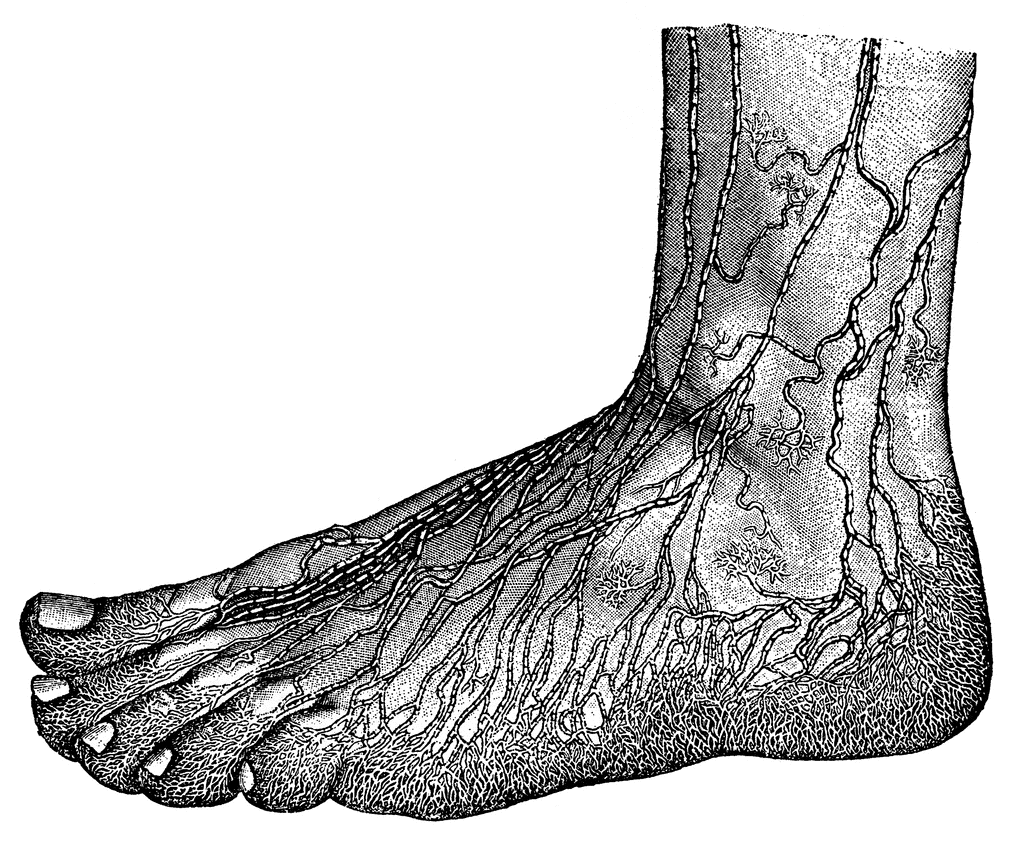
Lymph nodes of the foot

Lymph nodes of the foot

Lymph supply of the feet


Bellissimabeauty

Lymph supply of the feet


3d4 Medical


ClipArt

See also:

Lymph nodes

Wednesday, November 14, 2012

Congenital Lymphedema : Another Unique and Gender Specific Stigmata of Tuberous Sclerosis?


Congenital lymphedema : another unique and gender specific stigmata of tuberous sclerosis?

Nov 2012

Source

Department of Cardiology, SCTIMST, Thiruvananthapuram, Kerala, India.

We report a child of tuberous sclerosis with a rare association of congenital lymphedema and cardiac rhabdomyoma since birth.

A 3-month-old female child, born of non-consanguineous marriage , was detected soon after birth to have nonpitting edema of left lower limb extending from thigh to foot. Neurosonogram and USG abdomen were normal. Echocardiography revealed a 9 x 9 mm rounded pedunculated mass in LV outflow tract, attached to aorto-mitral continuity junction. Physical examination revealed multiple hypopigmented macules in right upper limb and trunk suggestive of ash leaf macules. X-ray chest and ECG was normal for age. Blood investigations were normal. The child’s father had a history of seizure disorder and was on antiepileptic drugs. His physical examination revealed hypopigmented to depigmented macules in both upper limbs and trunk, skin colored plaques with irregular border in lumbosacral region and multiple hyperpigmented to erythematous papules and small plaques over face suggestive of ash leaf macules, shagreen patches, and angiofibromas respectively.

Lymphedema is a chronic tissue swelling that is most commonly manifested in a limb. This condition results from impaired lymph drainage in the presence of normal capillary filtration. The three main consequences of lymphatic failure are lymphedema, infection and, very rarely, cancer [1]. Most forms of primary lymphedema are thought to be caused by a congenital abnormality of the lymphatic system and present at or soon after birth. Cardiac rhabdomyomas are intracavitary or intramural tumors that are present in nearly 50 to 70% of infants with tuberous sclerosis (TSC). Most children are asymptomatic. Symptoms are attributed to the presence of intracardiac obstruction, myocardial involvement, and rhythm disturbances [2].

Congenital lymphedema is a rare association with tuberous sclerosis with only few cases reported earlier [3,4]. The previous reported patients were females but unlike our child, they presented with history of multiple seizures while our child had no seizures but instead had a cardiac rhabdomyoma detected incidentally. It is interesting to note that pulmonary lymphangio-myomatosis seen in tuberous sclerosis similarly occurs only in women which is hypothesized to be due to the fact that estrogen regulates TSC gene signalling and, perhaps, also the migration of TSC2-deficient cells [3].

The pathophysiology of congenital lymphedema in tuberous sclerosis is yet unclear. Previous authors have suggested that it could be due to the dysplastic development of lymphatic system in the affected limb as part of TSC gene mutation as this gene regulates cell growth, proliferation and migration. Congenital lymphedema may also be due to the abnormal smooth cell hypertrophy in subcutaneous tissue which externally compresses the superficial lymphatics. An increased awareness of this association may help pediatricians suspect tuberous sclerosis in a female child when congenital lymphedema is the sole external manifestation.

Friday, November 9, 2012

A newly designed SIPC device for management of lymphoedema.


WARNING TO ALL LYMPHEDEMA PATIENTS

This abstract is a prime example of just how bad information can be that is presented even through PubMed.

Lymphology 101 clearly shows that high pressure pneumatic devices can cause serious damage to the good lymphatics, making lymphedema even worse.

Read this for education, but please, please, please, what ever you do never ever ever set the compression level on high if you use a pneumatic device.

A newly designed SIPC device for management of lymphoedema.

PubMed

Pat

Wednesday, November 7, 2012

Lower limb lymphedema treated with lymphatico-venous anastomosis based on pre- and intraoperative icg lymphography and non-contact vein visualization: A case report.


Lower limb lymphedema treated with lymphatico-venous anastomosis based on pre- and intraoperative icg lymphography and non-contact vein visualization: A case report.


Mar 2012

Source

Department of Plastic and Reconstructive Surgery, University of Tokyo, Japan. mihara@keiseigeka.name

Abstract 

Lymphatico-venous anastomosis (LVA) is used to resolve lymph retention in lymphedema. However, the postoperative outcome of lower limb lymphedema is poorer than that for upper limb lymphedema, because of the location lower than the heart level. Improvement of the therapeutic outcome requires application of as many anastomoses as possible in a limited operation time, particularly since there is a positive correlation between the number of anastomoses and the therapeutic effect of LVA. In this case, we described a method to increase the efficiency of lymphatico-venous anastomosis for bilateral severe lower limb lymphedema through efficient identification of lymph vessels and veins suitable for anastomosis using indocyanine green (ICG) contrast imaging and AccuVein, a noncontact vein visualization system, respectively. Ten LVAs were succeeded at seven incisions, and the operation time was 3 hours and 5 minutes. Accuvein can be used for identification of subcutaneous venules with a diameter of about 0.5-1.0 mm. We used this approach in surgery for a case of bilateral lower limb lymphedema, with a resultant improvement in the surgical outcome.
*Editor's Note: Article is for information only and is NOT to be construed as an endorsement of the procedure, nor as a position of opposing the procedure.

Saturday, November 3, 2012

Is selective lymphadenectomy more cost-effective than routine lymphadenectomy in patients with endometrial cancer?


Is selective lymphadenectomy more cost-effective than routine lymphadenectomy in patients with endometrial cancer?


Oct 2012

Source

Divisions of Gynecologic Oncology, Department of Obstetrics and Gynecology, The Ohio State University College of Medicine, Columbus, OH, USA. Electronic address: aine.clements@osumc.edu.

Abstract


OBJECTIVE:

The objective of this study is to determine the cost-effectiveness of two strategies in women undergoing surgery for newly diagnosed endometrial cancer.

METHODS:

A decision analysis model compared two surgical strategies: 1) routine lymphadenectomy independent of intraoperative risk factors or 2) selective lymphadenectomy for women with high or intermediate risk tumors based on intraoperative assessment including tumor grade, depth of invasion, and tumor size. Published data were used to estimate the outcomes of stage, adjuvant therapy, and recurrence. Costs of surgery, radiation, and chemotherapy were estimated using Medicare Current Procedural Technology codes and Physician Fee Schedule. Cost-effectiveness ratios were estimated for each strategy. Sensitivity analyses were performed including an estimate for lymphedema (10%) for patients that underwent a lymphadenectomy.

RESULTS:

For 40,000 women diagnosed annually with endometrial cancer in the United States, the annual cost of selective lymphadenectomy is $1.14billion compared to $1.02billion for routine lymphadenectomy. The selective lymphadenectomy strategy was $123.3million more expensive. Five-year progression-free survival was 85.9% with routine compared to 79.3% with selective. Treatment cost $6349 more per survivor in the selective strategy compared to routine strategy ($36,078 vs. $29,729). These results held up under a variety of sensitivity analyses including costs due to lymphedema which were higher in the routine lymphadenectomy strategy compared to the selective lymphadenectomy strategy ($10million vs. $7.75million).

CONCLUSIONS:

A strategy of selective lymphadenectomy based on intraoperative risk factors for patients with endometrial cancer was less effective and more costly than routine lymphadenectomy even when the impact of lymphedema was considered.

Elsevier

see also: PubMed

Complications of lymphadenectomy for gynecologic cancer.


Complications of lymphadenectomy for gynecologic cancer.


Oct 2012

Source

Service de Chirurgie Cancérologique Gynécologique et du Sein, Hôpital Européen Georges Pompidou, AP-HP, Paris, France; Faculté de médecine, Université Paris-Descartes, Paris, France. Electronic address: abdellaziz.achouri@egp.aphp.fr.

Abstract


INTRODUCTION: 

Symptomatic postoperative lymphocysts (SPOLs) and lower-limb lymphedema (LLL) are probably underestimated complications of lymphadenectomy for gynecologic malignancies. Here, our objective was to evaluate the incidence and risk factors of SPOLs and LLL after pelvic and/or aortocaval lymphadenectomy for gynecologic malignancies.

METHODS: Single-center retrospective study of consecutive patients who underwent pelvic and/or aortocaval lymphadenectomy for ovarian cancer, endometrial cancer, or cervical cancer between January 2007 and November 2008. The incidences of SPOL and LLL were computed with their 95% confidence intervals (95%CIs). Multivariate logistic regression was performed to identify independent risk factors for SPOL and LLL.

RESULTS: 
We identified 88 patients including 36 with ovarian cancer, 35 with endometrial cancer, and 17 with cervical cancer. The overall incidence of SPOL was 34.5% (95%CI, 25-45) and that of LLL was 11.4% (95% confidence interval [95%CI], 5-18). Endometrial cancer was independently associated with a lower risk of SPOL (adjusted odds ratio [aOR], 0.09; 95%CI, 0.02-0.44) and one or more positive pelvic nodes with a higher risk of SPOL (aOR, 4.4; 95%CI, 1.2-16.3). Multivariate logistic regression failed to identify factors significantly associated with LLL.

CONCLUSION:

Complications of lymphadenectomy for gynecologic malignancies are common. This finding supports a more restrictive use of lymphadenectomy or the use of less invasive techniques such as sentinel node biopsy.

Friday, October 26, 2012

Pramipexole-related chronic lower limb oedema in a patient with Parkinson's disease.


Pramipexole-related chronic lower limb oedema in a patient with Parkinson's disease.


Sept 2012

Source

Department of Neurology, Austin Health, 6 North, Austin Tower, 145 Studley Road, Heidelberg, Victoria 3084, Australia. zavala.md@gmail.com

Abstract


Pramipexole is a non-ergot dopamine agonist that is used frequently as a single therapy or in combination for the management of Parkinson's disease. Common side effects are daytime drowsiness, hypotension, hallucinations and compulsive behaviour. We describe a patient who developed severe chronic and extensive lymphoedema after pramipexole was introduced and that resolved after its cessation.

Chyloperitoneum, chylothorax and lower extremity lymphedema in woman with sporadic lymphangioleiomyomatosis successfully treated with sirolimus: a case report.


Chyloperitoneum, chylothorax and lower extremity lymphedema in woman with sporadic lymphangioleiomyomatosis successfully treated with sirolimus: a case report.


June 2012

Source

Department of Internal Medicine, Wroclaw Medical University, Wroclaw, Poland.

Abstract


Lymphangioleiomyomatosis (LAM) is a rare disease characterized by diffuse thin-walled cysts throughout the lungs on computed tomography and diffuse proliferation of abnormal smooth muscle-like cells (LAM cells) on lung biopsy. LAM affects women almost exclusively, predominantly in their reproductive age. The most typical presenting symptoms include dyspnea, spontaneous pneumothorax, cough and chylothorax. Abdominal findings represent less common initial manifestations of the disease and may pose diagnostic difficulties. The treatment of LAM has not been fully established. Recent studies report effectiveness of sirolimus in LAM patients. We report the case of a 45-year-old woman with sporadic LAM, successfully treated with sirolimus, in whom the first manifestation of the disease was chyloperitoneum and after three and nine years, respectively, lymphedema of the left lower extremity and right sided chylothorax occurred.

Friday, March 2, 2012

Treating chronic lower limb lymphedema with the charles procedure in a renal allograft recipient.

Treating chronic lower limb lymphedema with the charles procedure in a renal allograft recipient.


Jan 2012

Source

Department of Surgery, Subdivision of Plastic and Reconstructive Surgery, China Medical University Hospital, China Medical University, Taichung City, Taiwan. hsiaosu.wu@gmail.com

Abstract


We report our experience in applying the Charles procedure to a female renal allograft recipient for her left lower leglymphedema. This is a rare comorbidity in limb lymphedema victims, and the use of the Charles procedure has not been reported in such an immunocompromised patient. After surgery, infection was well controlled, and there was minimal scar in the affected limb.


Lippincott, Williams Wilkins Annals of Plastic Surgery


Editor's Note: I posted this page for informational purposes only. I am opposed to surgical reduction of lymphedema except in the most severe cases of lymphedema that does NOT respond to other treatment modalities. This "glowing" article does not even touch on all the complications that can/are associated with surgical debulking surgeries.


Complications of Lymphedema Debulking Surgery


Thompsons's Procedure (The surgery I had)


Charles Procedure


Sistrunk Procedure


Kondolean Procedure


Homan's-Miller Procedure